
Engineering brief
Bridging Design Systems and Code with MCP and AI Agents
The Brief
MCP + agents can enforce design systems—only if your design system is a machine-readable, governed API.
Decision relevance
Read this for workflow impact, implementation trade-offs, and the claims that need technical scrutiny before they reach team planning.
Summary
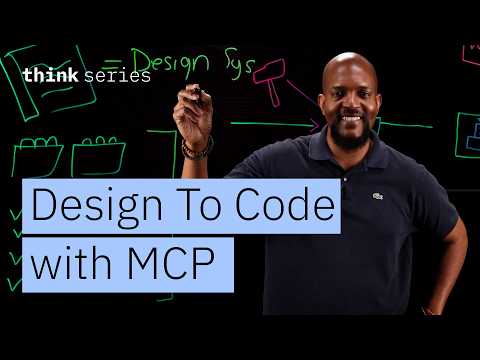
The video argues that connecting design systems to AI agents via the Model Context Protocol (MCP) lets agents build interfaces that follow the rules precisely. The real shift isn’t agents “getting smarter”; it’s turning style guides and component libraries into authoritative, machine-readable contracts that tools can query, validate against, and execute.
What changes: Design Systems and Platform teams become API providers, not just doc writers. Tokens, components, accessibility rules, and layout constraints must be versioned, queryable, and testable. If you operationalize your design system (tokens exposed via MCP servers, component constraints codified, validation tools in CI), you can move work from manual PR policing to automated conformance checks and agent-driven scaffolding.
Tradeoffs: You’re swapping bespoke UI work for upfront design-ops engineering—schema design, MCP server maintenance, contract tests, and governance. Latency, tool reliability, and ambiguous specs will break agents. Without strong versioning and deprecation policies, agents will ship UIs against stale guidance. Accessibility and performance rules must be explicit (and testable), not aspirational docs.
Weaknesses in the pitch: It’s high-level and light on evidence. No demonstration of end-to-end integration (Figma → tokens → MCP server → codegen → CI checks), no metrics on error rates, and no discussion of failure handling or human-in-the-loop. Claims of “absolutely correctly” ignore inevitable edge cases (responsive behavior, design exceptions, theming, stateful components, internationalization).
What teams should watch: Invest in making your design system executable—design tokens as a source of truth, component APIs with constraints, MCP endpoints for discovery/validation, and CI gates that block non-conformant PRs. Measure agent pass rates on golden tasks, design rule violations, rework due to spec drift, and latency impacts on developer workflows.
Why It Matters
If design systems become enforceable APIs, UI delivery shifts from coding to specification with automated conformance.
Editorial analysis
Key claims
- Agents help only after you productize your design system; otherwise, it’s just prettier autocomplete.
Practical use cases
- Use this as input for tooling evaluation, workflow planning, and technical due diligence.
Risks / caveats
- Promises of agents building perfect UIs without rigorous specs, governance, testing, and human oversight.
Who should care
- Engineering managers, tech leads, and CTOs evaluating AI or developer tooling decisions.
Related topics
Bottom Line
Agents help only after you productize your design system; otherwise, it’s just prettier autocomplete.
Watch
This video is blocked due to your privacy settings. To watch this video, please accept YouTube marketing cookies.
Related breakdowns
The agent-ready web: Simplify user actions with WebMCP — Tara Agyemang, Google
A short briefing on the practical engineering implications, trade-offs, and claims worth ignoring.
Claude Fable 5 - Full 319 page Breakdown
A short briefing on the practical engineering implications, trade-offs, and claims worth ignoring.
Don't use Fable 5 in Claude… do this instead
A short briefing on the practical engineering implications, trade-offs, and claims worth ignoring.
Get TL;DW
Too Long; Didn't Watch.
A concise breakdowns of the AI and devtools videos that actually matter for engineering leaders.
Free. Weekly. No hype.
Video and thumbnails remain the property of their respective creators. tldw.news provides editorial analysis, commentary, and discovery links to original content.