
Engineering brief
Specialized Models: The Real Enterprise AI Edge
The Brief
Enterprise AI differentiation hinges on custom post-training, not waiting for the next general model. RLVR fine-tuning can be 20x more compute-efficient than pre-training, making it practical for proprietary data. The real bottleneck? Defining 'good' through robust internal evals. Time-to-value favors early investment—the gap between general and specialized models will persist for domain-specific tasks.
Decision relevance
Read this for workflow impact, implementation trade-offs, and the claims that need technical scrutiny before they reach team planning.
Summary
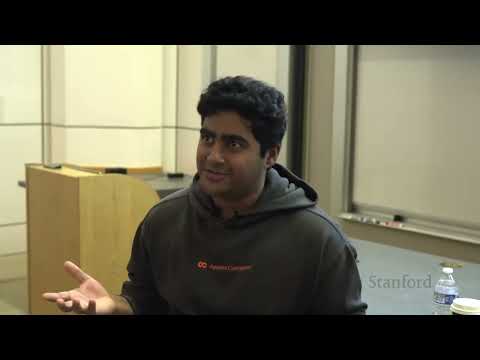
Enterprise AI is moving from one-size-fits-all models to highly specialized ones. Yash Bottle, founder of Applied Compute, argues that while general models set the floor, custom post-training using reinforcement learning with verifiable rewards (RLVR) unlocks the ceiling. The economics are stark: RLVR can be 20x more compute-efficient than pre-training, making it feasible for enterprises to fine-tune models on proprietary data for tasks like menu extraction or real-time bug detection. This approach sidesteps the data wall by creating targeted RL environments where the model learns from verifiable outcomes—compilation, unit tests, human corrections—rather than just mimicking internet text.
The real bottleneck is no longer compute or architecture, but defining what ‘good’ looks like. Internal evals become the roadmap, and the ability to craft robust reward signals is the new competitive advantage. For DoorDash, that meant reducing error rates directly on merchant menu digitization. For Cognition, it meant training a tiny, fast model to catch bugs as developers type, outperforming larger generic models on a Pareto frontier of cost, latency, and accuracy.
Engineering leaders face a ‘build vs. wait’ dilemma: should they invest in specialisation now or bank on future general models solving the problem? Bottle’s answer is pragmatic—time-to-value favors early investment, and the ROI holds even if models improve, because the gap between general and specialized will persist for domain-specific tasks. The key is capturing and systematizing human feedback loops, not just throwing prompts at a black box.
Continual learning is on the horizon but remains nascent, limited by data access and sparse reward signals. Cursor’s composer model, which updates based on user accept/revert actions, shows the promise, but it’s still days-to-weeks cycles rather than true online learning. The real near-term wins come from offline RLVR on curated datasets.
Bottom line: the AI supercycle’s enterprise chapter will be written by teams that internalize model customization. It’s not about chasing AGI, but about building the muscle to create specialized models that compound business knowledge over time.
Why It Matters
Enterprise differentiation now depends on custom fine-tuning with domain-specific evals, not waiting for next-gen models.
Editorial analysis
Key claims
- Invest in internal evals and specialized post-training loops to unlock immediate business value from AI.
Practical use cases
- Use this as input for tooling evaluation, workflow planning, and technical due diligence.
Risks / caveats
- Hype about AGI timelines; focus on practical, low-compute RLVR to solve business problems today.
Who should care
- Engineering managers, tech leads, and CTOs evaluating AI or developer tooling decisions.
Related topics
Bottom Line
Invest in internal evals and specialized post-training loops to unlock immediate business value from AI.
Watch
This video is blocked due to your privacy settings. To watch this video, please accept YouTube marketing cookies.
Related breakdowns
Cloudflare bought Vite to destroy Vercel
A short briefing on the practical engineering implications, trade-offs, and claims worth ignoring.
Build a Full-Stack GenAI Project in 4 Hours (FastAPI, React, Supabase)
A short briefing on the practical engineering implications, trade-offs, and claims worth ignoring.
W&B MCP Server: Agent Access to Experiment Data
W&B's MCP server makes experiment data agent-queryable. Useful for training-heavy teams. Report generation is still immature.
Get TL;DW
Too Long; Didn't Watch.
A concise breakdowns of the AI and devtools videos that actually matter for engineering leaders.
Free. Weekly. No hype.
Video and thumbnails remain the property of their respective creators. tldw.news provides editorial analysis, commentary, and discovery links to original content.