
Engineering brief
Two Rival Bets on AGI: Google I/O Highlights
The Brief
Google bets on fast, “good-enough” AI and world-models; rivals diverge on AGI path. Cost, reliability, provenance matter most now.
Decision relevance
Read this for workflow impact, implementation trade-offs, and the claims that need technical scrutiny before they reach team planning.
Summary
The real shift from Google I/O isn’t frontier capability; it’s a strategy pivot: pack “good-enough” multimodal AI into the search box, price it aggressively, and push speed. Gemini 3.5 Flash is notably fast and competent across several domains, but Google didn’t claim coding supremacy. This is a bid to win everyday workflows, not to dethrone frontier models in deep reasoning.
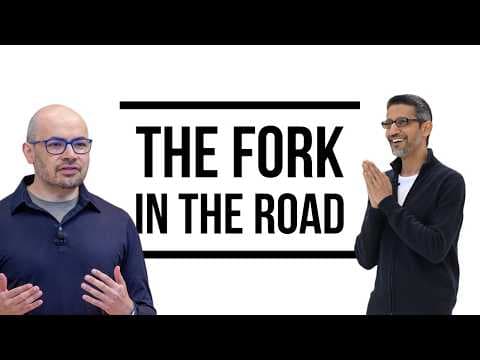
Two rival AGI bets emerged. Google’s leadership frames video/world-model simulation as a step toward AGI. In contrast, OpenAI’s leadership signals text-centric reasoning will get there without world simulators. Anthropic adds a third vector: recursive self-improvement (RSI) to accelerate pre-training using the model itself. None of these are proven; they are strategic wagers with different compute, data, and safety tradeoffs.
Operationally, Google’s message to enterprises was blunt: you’re overspending on AI; use faster, cheaper models where you can. Benchmarks suggest Gemini 3.5 Flash is strong on tasks like chart/table reasoning and some finance workflows, but not a leader in agentic coding. Expect domain-specialized strengths over one-model-to-rule-them-all. Pricing isn’t 10x cheaper at parity; actual costs hinge on tokenization and latency needs.
Reliability is the constraint. A new independent paper shows models can “believe” fabricated claims even when repeatedly labeled false—unless negations are placed extremely precisely. DeepMind leadership calls this jaggedness structural, not a patchable bug. Google’s own caveat—agents are still early to be “truly helpful”—and over-restrictive filters on multimodal inputs confirm the gap between demos and production.
Governance is tightening: OpenAI adopting Google’s SynthID watermarking and both companies allowing “lawful” military use signal a shift in provenance and policy posture. For engineering leaders, the signal is to design verifiable workflows, not chase AGI timelines or demo sizzle.
Why It Matters
Procurement, guardrails, and workflow design—not frontier hype—will determine real ROI. Expect domain specialization and persistent brittleness; build verification, provenance, and cost controls in now.
Editorial analysis
Key claims
- Adopt a cost-governed, verified AI stack; expect domain-specific wins and brittle agents through 2025.
Practical use cases
- Use this as input for tooling evaluation, workflow planning, and technical due diligence.
Risks / caveats
- AGI timeline rhetoric, flashy video/OS demos, and leaderboard cherry-picking without reproducible reliability on real tasks.
Who should care
- Engineering managers, tech leads, and CTOs evaluating AI or developer tooling decisions.
Related topics
Bottom Line
Adopt a cost-governed, verified AI stack; expect domain-specific wins and brittle agents through 2025.
Watch
This video is blocked due to your privacy settings. To watch this video, please accept YouTube marketing cookies.
Related breakdowns
Claude Fable 5 & Apple’s NVIDIA deal
A short briefing on the practical engineering implications, trade-offs, and claims worth ignoring.
Yossi Matias on the golden age of research
A short briefing on the practical engineering implications, trade-offs, and claims worth ignoring.
The CEO Must Be the Chief AI Officer
A short briefing on the practical engineering implications, trade-offs, and claims worth ignoring.
Get TL;DW
Too Long; Didn't Watch.
A concise breakdowns of the AI and devtools videos that actually matter for engineering leaders.
Free. Weekly. No hype.
Video and thumbnails remain the property of their respective creators. tldw.news provides editorial analysis, commentary, and discovery links to original content.