
Engineering brief
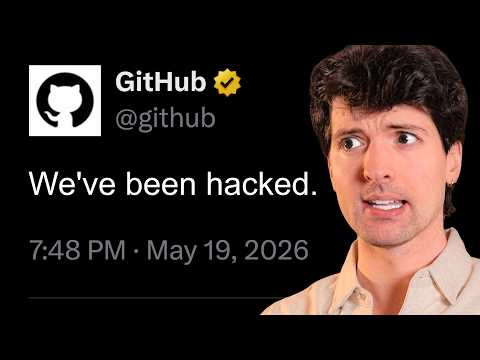
Why a Verified VS Code Extension Compromised GitHub’s Repos
The Brief
A poisoned VS Code extension with 2.2 million installs and a verified badge gave attackers access to GitHub’s internal repos within 18 minutes of publishing. The real risk is systemic: auto-update defaults and no staging buffer mean any compromised extension spreads instantly across your team’s machines. Microsoft’s marketplace lacks push cleanup, and npm still can’t reverse a publish. For engineering leaders, this is a signal to shrink your extension surface, disable auto-updates, and treat every third‑party token as a liability. The full breakdown covers what your team should do today.
Decision relevance
Read this for workflow impact, implementation trade-offs, and the claims that need technical scrutiny before they reach team planning.
Summary
A GitHub employee installed a compromised VS Code extension from Microsoft's own marketplace, giving attackers access to internal repositories. The breach exploited auto-update defaults, nonexistent update staging, and no meaningful publisher verification. The extension in question—NX Console—had a verified badge and 2.2 million installs. Malicious code was live for just 18 minutes, but because VS Code's marketplace eagerly syncs and auto-updates extensions when the sidebar is even opened, the exposure window was far larger than a 12-hour periodic timer would suggest.
The root cause traces back to credentials stolen in earlier supply chain attacks (notably the "mini shyut" worm that swept through npm and related ecosystems). Those tokens were used to publish a trojaned extension. The maintainer didn't receive a notification email for six minutes; the takedown required manual publishing intervention. No automated safety net, no staging buffer, no push cleanup existed. The result: internal GitHub secrets rotated, 3,800 repos reportedly exfiltrated, and a global engineering community left wondering how a few small process changes weren't already in place.
What stings most is the systemic apathy. npm still lacks a publish reversal mechanism, trusting that immutable packages protect users. VS Code and Cursor auto-update extensions eagerly with no review gate. Marketplace "verified publisher" badges create false confidence. Meanwhile, startups like Socket and Aikido routinely detect these compromises faster than Microsoft, underscoring a security culture gap. The economics of unlimited distribution with zero-cost attack attempts, combined with AI-assisted credential scraping, make these attacks repeatable and scalable.
For engineering teams, the practical takeaway is uncomfortable: shrink your extension surface aggressively, audit existing extensions, disable auto-update for VS Code and Cursor, prefer manual installs from trusted sources, and treat every third-party token in CI as a liability. Extensions are not benign—they share your file system, environment variables, and SSH keys. If you fund or maintain popular open-source tooling, auditing publishing credentials and contributor access is now table stakes. The core pain point isn't a single zero-day; it's that Microsoft's distribution platforms have not adjusted their threat model to match modern supply chain velocity.
Why It Matters
A single poisoned extension compromised GitHub’s internal repos, proving that current marketplace and dependency defaults are a direct risk to production integrity.
Editorial analysis
Key claims
- Auto-updating extensions with no staging or takedown mechanism creates an unpatchable supply chain risk for every developer.
Practical use cases
- Use this as input for tooling evaluation, workflow planning, and technical due diligence.
Risks / caveats
- Blaming NX maintainers—this was a platform and process failure at Microsoft, not an app-level mistake.
Who should care
- Engineering managers, tech leads, and CTOs evaluating AI or developer tooling decisions.
Related topics
Bottom Line
Auto-updating extensions with no staging or takedown mechanism creates an unpatchable supply chain risk for every developer.
Watch
This video is blocked due to your privacy settings. To watch this video, please accept YouTube marketing cookies.
Related breakdowns
Cloudflare bought Vite to destroy Vercel
A short briefing on the practical engineering implications, trade-offs, and claims worth ignoring.
Your prompts are tech debt.
A short briefing on the practical engineering implications, trade-offs, and claims worth ignoring.
Why Simpler AI Coding Workflows Win
Simplicity beats complex agent workflows: single-threaded tasks, minimal prompts, and context discipline produce faster, more reliable AI code.
Get TL;DW
Too Long; Didn't Watch.
A concise breakdowns of the AI and devtools videos that actually matter for engineering leaders.
Free. Weekly. No hype.
Video and thumbnails remain the property of their respective creators. tldw.news provides editorial analysis, commentary, and discovery links to original content.