
Three signals confirm the same wall: AI code review doesn't scale
AI code generation has outpaced human review capacity across three separate analyses.
Cognitive surrender means humans agree with wrong AI output 80% of the time; teams need automated verification, not more reviewers.
Review is breaking. AI code volume has outpaced human review capacity.
Sonar's CEO says reviewers agree with wrong AI output 80% of the time.
Qodo's demo shows a one-line change can break production across repos.
Teams need automated verification, not more reviewers.
Self-hosting pays off. Revolut cut AI coding spend 90% by self-hosting an open model on 56 GPUs.
Token costs dropped to $0.30 per million, and cheap tokens changed engineer behavior.
The catch: it takes DevOps expertise, tuning, and compliance sandboxing.
Agents break daily. Temporal's survey shows 41% of agent teams face daily failures, and state management is the top productivity blocker.
Serval's CEO argues enterprise governance of agent actions will become the critical moat.
Model quality is no longer the bottleneck.
AI EngineerNo Priors: AI, Machine Learning, Tech, & Startups
My take
The review bottleneck is the real story today, but I'm skeptical of any single vendor's solution.
The cognitive surrender stat is alarming, but the answer probably isn't one tool.
Start by auditing your own PR pipeline: measure how many AI-generated PRs skip deep review, and run a pilot with a separate review agent using a different model.
The self-hosting data from Revolut is the most actionable number: know your per-engineer token spend and consider a bounded pilot.
The governance and state management problems are real, but they're longer-term bets.
The videos behind this brief
We watched these so you don't have to.
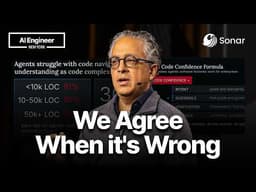 The hidden collapse of human code review under AI volumeAI Engineer
 Code Review Is the New Bottleneck: The Blast Radius ProblemAI Engineer
 AI Code Needs More Than Static Analysis — Verifying Intent Is theAI Engineer
 Revolut cut AI coding costs 90%. The catch is GPU infrastructureAI Engineer
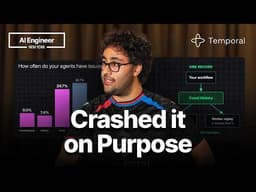 Production AI Agents Break Daily, But Trust Remains HighAI Engineer
 The real enterprise AI moat is guardrails, not generationNo Priors: AI, Machine Learning, Tech, & Startups
Video and thumbnails remain the property of their respective creators. tldw.news provides editorial analysis, commentary, and discovery links to original content.