
The Brief
The bet here is not on AI copilots but on reorganizing the entire company as a set of recursive, self-improving AI loops. The core shift: make every signal—emails, Slack, telemetry—legible to AI, then let agents detect failures, write fixes, and deploy overnight. Software becomes disposable; the real asset is captured business context. For engineering leaders, the practical signal is clear: start treating institutional knowledge as infrastructure, and expect headcount compression in coordination roles.
Decision relevance
Read this for workflow impact, implementation trade-offs, and the claims that need technical scrutiny before they reach team planning.
Summary
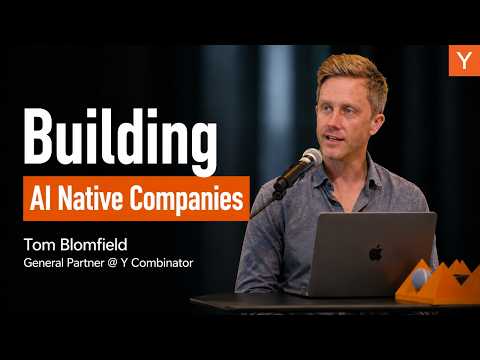
The core argument is a shift from using AI for individual productivity (e.g., copilots that make engineers 20% faster) to reorganizing the entire company as a set of recursive, self-improving AI loops. This isn't about bolting AI onto existing workflows; it's about making the company's domain knowledge—currently scattered across emails, Slack, and docs—legible to AI. The proposed architecture involves sensor layers (customer emails, telemetry), policy layers (permission rules), tool layers (deterministic APIs), quality gates, and learning mechanisms that feed failures back into the system for automatic correction.
A concrete example is given: an internal agent that not only answers queries but is watched by a monitoring agent that identifies failures, diagnoses why they happened (missing tools, bad database views), writes code to fix them, and deploys the fix overnight. This moves the system from a static sidekick to a self-repairing function. The implications are structural: middle management becomes obsolete as AI handles coordination, leaving only individual contributors (ICs) and directly responsible humans interfacing with the real world. The operational principle becomes 'burn tokens, not headcount,' with a provocative suggestion that measuring token usage per employee could directionally indicate value.
The talk stresses that everything must be recorded to be legible to AI—office hours, DMs, emails—and that software becomes ephemeral, disposable, and regeneratable as models improve. The real asset is the captured business context and skills, not the code. A notable example is regenerating YC's entire user manual from 2,000 hours of recorded office hours over a weekend. Skeptically, the vision of a fully self-improving company across all functions is still aspirational, and the idea of token usage as a blunt metric is acknowledged as easily gamed. For engineering teams, the practical takeaway is to start capturing institutional knowledge exhaustively and to treat internal software as temporary artifacts generated on demand from that knowledge base.
Why It Matters
Legible institutional knowledge and self-correcting AI loops could compress headcount needs and permanently reshape team structures and management roles.
Editorial analysis
Key claims
- Capture every signal; let AI orchestrate and self-repair. Software becomes disposable; context is the real asset.
Practical use cases
- Use this as input for tooling evaluation, workflow planning, and technical due diligence.
Risks / caveats
- The 'token usage as performance metric' idea is directionally interesting but dangerously gameable in practice.
Who should care
- Engineering managers, tech leads, and CTOs evaluating AI or developer tooling decisions.
Related topics
Bottom Line
Capture every signal; let AI orchestrate and self-repair. Software becomes disposable; context is the real asset.
Watch
This video is blocked due to your privacy settings. To watch this video, please accept YouTube marketing cookies.
Related breakdowns
The CEO Must Be the Chief AI Officer
A short briefing on the practical engineering implications, trade-offs, and claims worth ignoring.
Conductor CEO Charlie Holtz Walks Us Through His AI Coding Setup
A short briefing on the practical engineering implications, trade-offs, and claims worth ignoring.
How to Build an AI-Native Services Company
A short briefing on the practical engineering implications, trade-offs, and claims worth ignoring.
Get TL;DW
Too Long; Didn't Watch.
A concise breakdowns of the AI and devtools videos that actually matter for engineering leaders.
Free. Weekly. No hype.
Video and thumbnails remain the property of their respective creators. tldw.news provides editorial analysis, commentary, and discovery links to original content.