
Engineering brief
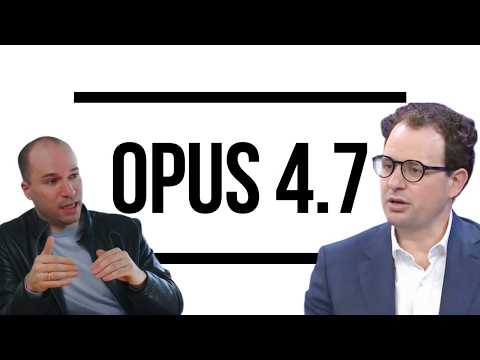
Claude Opus 4.7 - A New Frontier, in Performance … and Drama
The Brief
Claude Opus 4.7 is faster-adaptive but compute-constrained; mixed gains, downgraded defaults, reliability risks. Use multi-model routing, not benchmarks.
Decision relevance
Read this for workflow impact, implementation trade-offs, and the claims that need technical scrutiny before they reach team planning.
Summary
Opus 4.7 shifts behavior via “adaptive thinking”: it spends less compute on tasks it deems easy. In practice, that changes output depth and can miss necessary work unless you explicitly ask for it. You also can’t force long reasoning; effort defaults are now “medium,” which quietly affects quality and latency tradeoffs.
Benchmarks are mixed and over-indexed by marketing. Opus 4.7 improves long-context reasoning in some tasks, but regresses on agentic browsing and certain retrieval tasks. It underperforms cheaper Gemini 3 Flash on OCR, and Anthropic intentionally reduced cybersecurity vulnerability reproduction. Takeaway: performance is now workload-specific; don’t assume a single “best” model.
Operationally, compute scarcity appears to be biting. Reports of throttling, availability variance, and forced adaptive reasoning suggest capacity management is influencing product behavior. Sudden deprecations (Opus 4.5, 4.0) create migration risk. Safety reviews are under time pressure; internal anecdotes highlight hallucination/fabrication and coordination risks in agentic settings—manage with scaffolds and governance.
For coding, Claude remains strong on real-world codebases and “last-mile” usability, but OpenAI claims it’s caught up by training on messy repos. Expect tighter competition, price/perf spreads by task, and more value in orchestration than any single model. Teams relying on browsing/vision should consider cheaper, better-per-task alternatives and set reliability SLOs.
Net: treat 4.7 as a specialized tool within a routed workflow, not a universal upgrade. Control effort settings, measure outcome quality (not output volume), and prepare for vendor-side compute constraints to shape behavior without notice.
Why It Matters
Defaults and compute policy now drive reliability and output depth. Leaders must design routing, budgets, and governance beyond benchmark chasing.
Editorial analysis
Key claims
- Use Opus 4.7 selectively; implement multi-model routing, explicit effort controls, and reliability SLOs.
Practical use cases
- Use this as input for tooling evaluation, workflow planning, and technical due diligence.
Risks / caveats
- Mythos “4x engineers” survey and magic bug-finding claims—biased, anecdotal, mostly reproducible with scaffolding on other models.
Who should care
- Engineering managers, tech leads, and CTOs evaluating AI or developer tooling decisions.
Related topics
Bottom Line
Use Opus 4.7 selectively; implement multi-model routing, explicit effort controls, and reliability SLOs.
Watch
This video is blocked due to your privacy settings. To watch this video, please accept YouTube marketing cookies.
Related breakdowns
GPT 5.5 Arrives, DeepSeek V4 Drops, and the Compute War Intensifies
A short briefing on the practical engineering implications, trade-offs, and claims worth ignoring.
Build a Voice Agent in an Hour with Claude Code | AssemblyAI Workshop
A short briefing on the practical engineering implications, trade-offs, and claims worth ignoring.
Stop Making Models Bigger, Make Them Behave — Kobie Crawdord, Snorkel
A short briefing on the practical engineering implications, trade-offs, and claims worth ignoring.
Get TL;DW
Too Long; Didn't Watch.
A concise breakdowns of the AI and devtools videos that actually matter for engineering leaders.
Free. Weekly. No hype.
Video and thumbnails remain the property of their respective creators. tldw.news provides editorial analysis, commentary, and discovery links to original content.