
Engineering brief
LangChain's Bet: The Agent Control Plane
The Brief
LangChain isn't just a framework anymore—it's a platform play. Their Agent Development Lifecycle (build, test, deploy, monitor) comes with a custom Rust database for agent traces, LLM gateway governance, and an ambient agent that triages issues. The integration is the signal, not any single feature. For teams scaling past prototypes, this forces an infrastructure standardization decision. Practical, but the lock-in risk is real. Read on for the engineering trade-offs: SmithDB's performance claims, the auth proxy design, and whether the 'meta-agent' actually works.
Decision relevance
Read this for workflow impact, implementation trade-offs, and the claims that need technical scrutiny before they reach team planning.
Summary
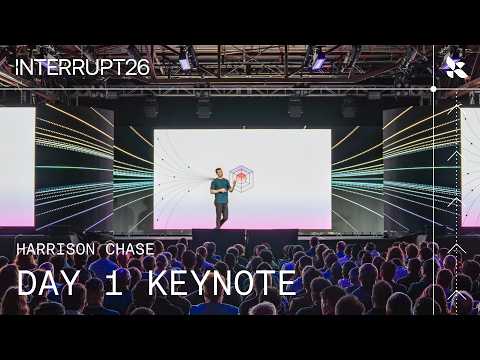
Harrison Chase and Ankush Gola from LangChain presented a unified vision for the 'Agent Development Lifecycle'—a structured, iterative loop of build, test, deploy, and monitor. This isn't a theoretical model; it's the organizing principle behind a wave of new, deeply integrated product launches announced at their Interrupt conference.
The real signal is the platform strategy. LangChain is moving beyond a framework for individual developers to provide infrastructure that engineering leaders can standardize on. Key launches include LangSmith Sandboxes (GA) for secure, persistent execution environments that separate untrusted agent code from sensitive API keys via an auth proxy; a Context Hub for storing and versioning 'agent.md' instructions as a primitive for open, portable memory; and an LLM Gateway for cost controls and PII guardrails—the kind of governance features required when scaling from one agent to a hundred.
The most audacious technical announcement is SmithDB, a custom database written in Rust and backed by object storage, purpose-built for the deeply nested, multimodal, and incredibly high-volume nature of agent traces. This is a direct response to the failure of traditional observability tools (like logging and APM) to handle data where a single trace can encode 8 million tokens. The claimed 6-15x performance improvement over their previous infrastructure is substantial, though real-world impact depends on workload.
The practical culmination is 'LangSmith Engine,' an ambient agent that proactively scans traces for issues, suggests code or prompt fixes, and proposes new evaluations. This automates the triage and debugging bottleneck that plagues agent teams. However, the effectiveness of such a meta-agent in complex, domain-specific systems remains unproven at scale; it's a high-potential but nascent capability. The unifying 'Manage Deep Agents' API (private preview) is their bet to make production deployment a single API call, abstracting away the complexity of the sandbox, context, and streaming protocol. The risk for teams is platform lock-in, but the value is a potentially 10x faster iteration speed by integrating the entire lifecycle under one observability-backed roof.
Why It Matters
It integrates agent building, testing, governance, and debugging into one platform, cutting the fragmented toolchain tax and slashing feedback loops.
Editorial analysis
Key claims
- LangChain is becoming the control plane for production agents, not just a prototyping framework, forcing infrastructure standardization decisions.
Practical use cases
- Use this as input for tooling evaluation, workflow planning, and technical due diligence.
Risks / caveats
- Hype around individual features; only the integrated workflow and governance controls have immediate architectural impact.
Who should care
- Engineering managers, tech leads, and CTOs evaluating AI or developer tooling decisions.
Related topics
Bottom Line
LangChain is becoming the control plane for production agents, not just a prototyping framework, forcing infrastructure standardization decisions.
Watch
This video is blocked due to your privacy settings. To watch this video, please accept YouTube marketing cookies.
Related breakdowns
The CEO Must Be the Chief AI Officer
A short briefing on the practical engineering implications, trade-offs, and claims worth ignoring.
How to operationalize AI governance with W&B Weave
A short briefing on the practical engineering implications, trade-offs, and claims worth ignoring.
I didn’t expect this from Anthropic
A short briefing on the practical engineering implications, trade-offs, and claims worth ignoring.
Get TL;DW
Too Long; Didn't Watch.
A concise breakdowns of the AI and devtools videos that actually matter for engineering leaders.
Free. Weekly. No hype.
Video and thumbnails remain the property of their respective creators. tldw.news provides editorial analysis, commentary, and discovery links to original content.