
Engineering brief
Symphony: AI Coding's Real Bottleneck Is Human Attention
The Brief
OpenAI's Symphony flips the AI coding paradigm: stop juggling interactive sessions and start managing tickets. A background orchestrator polls your project tool, spins up isolated agents per ticket, and logs everything back to the issue. The entire config lives in a version-controlled workflow.md—changing the process is a pull request. The real signal here is not the orchestration but the prerequisite: your codebase must be agent-operable, with bootable systems and self-verifying tests. Without that harness, Symphony is just a fancy task launcher.
Decision relevance
Read this for workflow impact, implementation trade-offs, and the claims that need technical scrutiny before they reach team planning.
Summary
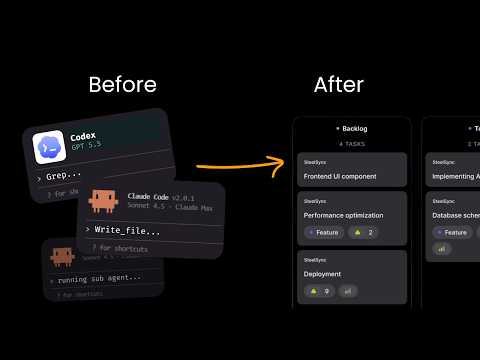
OpenAI's Symphony repo is not just an orchestrator for coding agents; it represents a deliberate shift in how engineering teams interact with AI. The core insight is that the bottleneck has moved from model capability to human cognitive load. Context-switching between multiple interactive coding sessions is unsustainable, leading to errors like issuing an instruction to the wrong thread. Symphony's solution is to elevate the human's role from session supervisor to ticket manager. It does this through a background process that polls a project management tool (Linear, by default) every 30 seconds. When a ticket is in 'to-do,' the system spins up an isolated workspace, launches an agent, and lets the agent work on the deliverable end-to-end. The ticket itself becomes the durable state machine for human-agent communication—agents report plans, logs, and video evidence of testing directly in the ticket. This design is absurdly simple but effective. Crucially, the entire configuration sits inside a single, version-controlled `workflow.md` file in your repo. The top part is YAML that configures the scheduler (which project to monitor, parallelism limits, hooks). The bottom part is a prompt that serves as the agent's standard operating procedure for any ticket. There is no separate config service, admin panel, or UI. Changing the process is a pull request. The real-world viability of this paradigm, however, hinges entirely on a concept the demo calls 'harness engineering': the codebase must be so well-prepared that an agent can complete tasks atomically. The agent needs a bootable system, excellent documentation, and—most critically—self-verifying testing tools that can produce artifacts like video recordings. Without this foundation, Symphony is just a task launcher for unreliable agents. The community is already building implementations in different languages and for different agents, but teams should understand that the orchestration is the easy part; the necessary base investment is in making the codebase truly agent-operable.
Why It Matters
It addresses the real scaling bottleneck for AI coding—human attention—by making tickets, not sessions, the unit of work.
Editorial analysis
Key claims
- Symphony is an opinionated bet that agent orchestration belongs in the repo, inseparable from the codebase's 'agent harness'.
Practical use cases
- Use this as input for tooling evaluation, workflow planning, and technical due diligence.
Risks / caveats
- The specific Linear or Codex integrations are interchangeable; the workflow pattern and repo-based config are the durable concepts.
Who should care
- Engineering managers, tech leads, and CTOs evaluating AI or developer tooling decisions.
Related topics
Bottom Line
Symphony is an opinionated bet that agent orchestration belongs in the repo, inseparable from the codebase's 'agent harness'.
Watch
This video is blocked due to your privacy settings. To watch this video, please accept YouTube marketing cookies.
Related breakdowns
How to build proactive agents & self-improving company (Fully explained)
A short briefing on the practical engineering implications, trade-offs, and claims worth ignoring.
Cloudflare bought Vite to destroy Vercel
A short briefing on the practical engineering implications, trade-offs, and claims worth ignoring.
Build a Full-Stack GenAI Project in 4 Hours (FastAPI, React, Supabase)
A short briefing on the practical engineering implications, trade-offs, and claims worth ignoring.
Get TL;DW
Too Long; Didn't Watch.
A concise breakdowns of the AI and devtools videos that actually matter for engineering leaders.
Free. Weekly. No hype.
Video and thumbnails remain the property of their respective creators. tldw.news provides editorial analysis, commentary, and discovery links to original content.