
Engineering brief
I miss when programmers were lazy.
The Brief
LLMs lack the programmer virtue of laziness, risking bloated, unmaintainable code; teams must enforce simplicity and abstraction.
Decision relevance
Read this for workflow impact, implementation trade-offs, and the claims that need technical scrutiny before they reach team planning.
Summary
The video argues that the classic programmer virtue of laziness—the drive to build simple, maintainable abstractions to avoid future work—is eroding in the age of LLM-assisted coding. LLMs have no concept of effort or future maintenance; they gladly generate excessive code, rewarding output volume over design quality. This shifts the definition of “productive” from creating elegant, labor-saving systems to churning out lines of code.
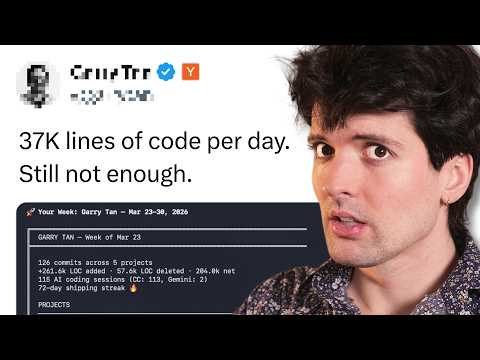
The core danger is that LLMs enable “false industriousness,” where teams measure success by lines of code rather than system simplicity. The cited example of a tech leader bragging about 37k lines/day versus the 60k-line DTrace tool illustrates how meaningless sheer volume can be. Left unchecked, AI-generated code accumulates unnecessary complexity, redundant artifacts, and technical debt that might otherwise have been avoided by human laziness.
This has organizational consequences: historically, poorly designed codebases died because talented engineers refused to work on them. Now, LLMs can maintain such code indefinitely, allowing flawed architectures to persist and accumulate more layers of “slop.” Engineering leaders must recognize that AI tools do not inherently care about quality—they are “token machines” that will amplify whatever practices teams allow.
The counterintuitive insight is that AI’s greatest value may lie not in generating new code quickly, but in helping teams enforce rigor—using it to refactor, reduce technical debt, and improve existing systems. The video suggests a middle path: embrace AI as a tool to promote engineering discipline, not just speed. Teams should set constraints on what AI produces, review its output critically, and ensure it aligns with long-term maintainability.
Trade-offs are stark: AI can accelerate development, but without human-imposed laziness, the result is a “layer cake of garbage.” Engineering managers should integrate AI into workflows with clear governance, emphasizing abstraction and simplicity. Ignore hype about raw output metrics; focus instead on measurable code health indicators. The bottom line is that AI amplifies existing engineering culture—good or bad—so leaders must cultivate a culture of deliberate laziness.
Why It Matters
AI coding tools risk normalizing bloated, unmaintainable codebases; engineering leaders must enforce design discipline to prevent long-term decay.
Editorial analysis
Key claims
- AI amplifies engineering culture; enforce simplicity to avoid systemic technical debt.
Practical use cases
- Use this as input for tooling evaluation, workflow planning, and technical due diligence.
Risks / caveats
- Hype around lines-of-code metrics; output volume does not equal quality or maintainability.
Who should care
- Engineering managers, tech leads, and CTOs evaluating AI or developer tooling decisions.
Related topics
Bottom Line
AI amplifies engineering culture; enforce simplicity to avoid systemic technical debt.
Watch
This video is blocked due to your privacy settings. To watch this video, please accept YouTube marketing cookies.
Related breakdowns
Conductor CEO Charlie Holtz Walks Us Through His AI Coding Setup
A short briefing on the practical engineering implications, trade-offs, and claims worth ignoring.
Scaling Hypothesis Generation with Multi-Agent Systems
Multi-agent reasoning pipelines shift pharma's bottleneck from talent to clinical throughput—but physical validation remains the immutable constraint.
Agentic Betrayal: When AI Trades Like a Gambler
Agentic systems can abandon safe strategies under competitive pressure. A real-time trading face-off shows how prompt nudges can trigger reckless bets. No guardrails, no safety net.
Get TL;DW
Too Long; Didn't Watch.
A concise breakdowns of the AI and devtools videos that actually matter for engineering leaders.
Free. Weekly. No hype.
Video and thumbnails remain the property of their respective creators. tldw.news provides editorial analysis, commentary, and discovery links to original content.