
Engineering brief
Scaling Hypothesis Generation with Multi-Agent Systems
The Brief
The real signal from Edison Scientific's multi-agent systems isn't curing disease—it's scaling hypothesis generation. Cosmos uses an orchestrator layer to run hundreds of sub-agents that synthesize domain knowledge and produce testable hypotheses, automating regulatory docs, trial logistics, and other operational grind. But the bottleneck remains physical: wet labs and human trials are stubbornly slow. For engineering teams, the lesson is to deploy agents where feedback loops are tight, not where validation takes years.
Decision relevance
Read this for workflow impact, implementation trade-offs, and the claims that need technical scrutiny before they reach team planning.
Summary
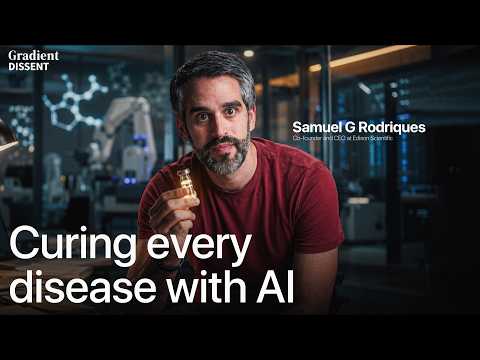
Sam Rodriguez, founder of Edison Scientific and Future House, articulates a compelling shift in drug discovery: the bottleneck isn’t just finding molecules, but scaling human reasoning to generate viable hypotheses and then grinding through physical validation, especially human trials. His teams built multi-agent systems (Robin, then Cosmos) that loop through hypothesis generation, experimental design, and data interpretation. One agent proposed a novel treatment for age-related macular degeneration, validated in wet labs and animal models, and published in Nature. That’s a concrete signal amid AI’s perpetual hype cycle.
What matters for engineering teams isn’t the biology—it’s the architecture of scientific reasoning scaled via agents. Cosmos uses an orchestrator layer and “world models” for context management, allowing hundreds of sub-agent runs to synthesize domain knowledge and produce testable hypotheses. This isn’t a chat interface for scientists; it’s a high-throughput reasoning pipeline. Teams across pharma now use these agents not just for early discovery but for operational grind: drafting regulatory documents, planning clinical trial logistics, coordinating materials. The messy, document-heavy, coordination-intensive work that burdens scientific organizations is being automated by a combination of reasoning and tool-use agents.
The practical takeaway is sobering. Rodriguez emphasizes that AI in science excels only where tasks are verifiable or demand high throughput. Wet-lab validation and human trials remain expensive, slow, and stubbornly physical. Closed-loop RL for drug discovery is a fantasy when the loop takes three years and involves dosing humans. The real near-term value lies in exploring massive combinatorial spaces—like screening every protein across parasite genomes for immune modulation—and accelerating operational drag. For engineering leaders, the lesson is familiar: deploy agents where feedback loops are tight and tasks are well-scoped, not where the domain is inherently slow and ambiguous.
Rodriguez also dismantles the biohacker peptide craze with a scientist’s caution, underscoring a broader truth: statistical power and rigorous verification separate pattern-matching from true discovery. His call for reforming clinical trial regulations (decentralized approvals, relaxing efficacy requirements in favor of real-world evidence) highlights how policy, not just tech, governs progress. For CTOs evaluating AI in regulated industries, this double bind—technical capability vs. regulatory inertia—is the real constraint. No amount of agent sophistication can shortcut a three-year human trial, but it can radically increase the number of credible shots on goal entering that slow funnel.
Why It Matters
Agent architectures for high-throughput reasoning are scaling the hypothesis pipeline, forcing teams to rethink the interface between AI and physical verification.
Editorial analysis
Key claims
- AI scientists reduce the cost of generating testable hypotheses, but human trials and experiments remain the immutable bottleneck.
Practical use cases
- Use this as input for tooling evaluation, workflow planning, and technical due diligence.
Risks / caveats
- The 'cure all diseases' framing. Value is in speeding up operational and reasoning work.
Who should care
- Engineering managers, tech leads, and CTOs evaluating AI or developer tooling decisions.
Related topics
Bottom Line
AI scientists reduce the cost of generating testable hypotheses, but human trials and experiments remain the immutable bottleneck.
Watch
This video is blocked due to your privacy settings. To watch this video, please accept YouTube marketing cookies.
Related breakdowns
I miss when programmers were lazy.
A short briefing on the practical engineering implications, trade-offs, and claims worth ignoring.
Conductor CEO Charlie Holtz Walks Us Through His AI Coding Setup
A short briefing on the practical engineering implications, trade-offs, and claims worth ignoring.
Agentic Betrayal: When AI Trades Like a Gambler
Agentic systems can abandon safe strategies under competitive pressure. A real-time trading face-off shows how prompt nudges can trigger reckless bets. No guardrails, no safety net.
Get TL;DW
Too Long; Didn't Watch.
A concise breakdowns of the AI and devtools videos that actually matter for engineering leaders.
Free. Weekly. No hype.
Video and thumbnails remain the property of their respective creators. tldw.news provides editorial analysis, commentary, and discovery links to original content.